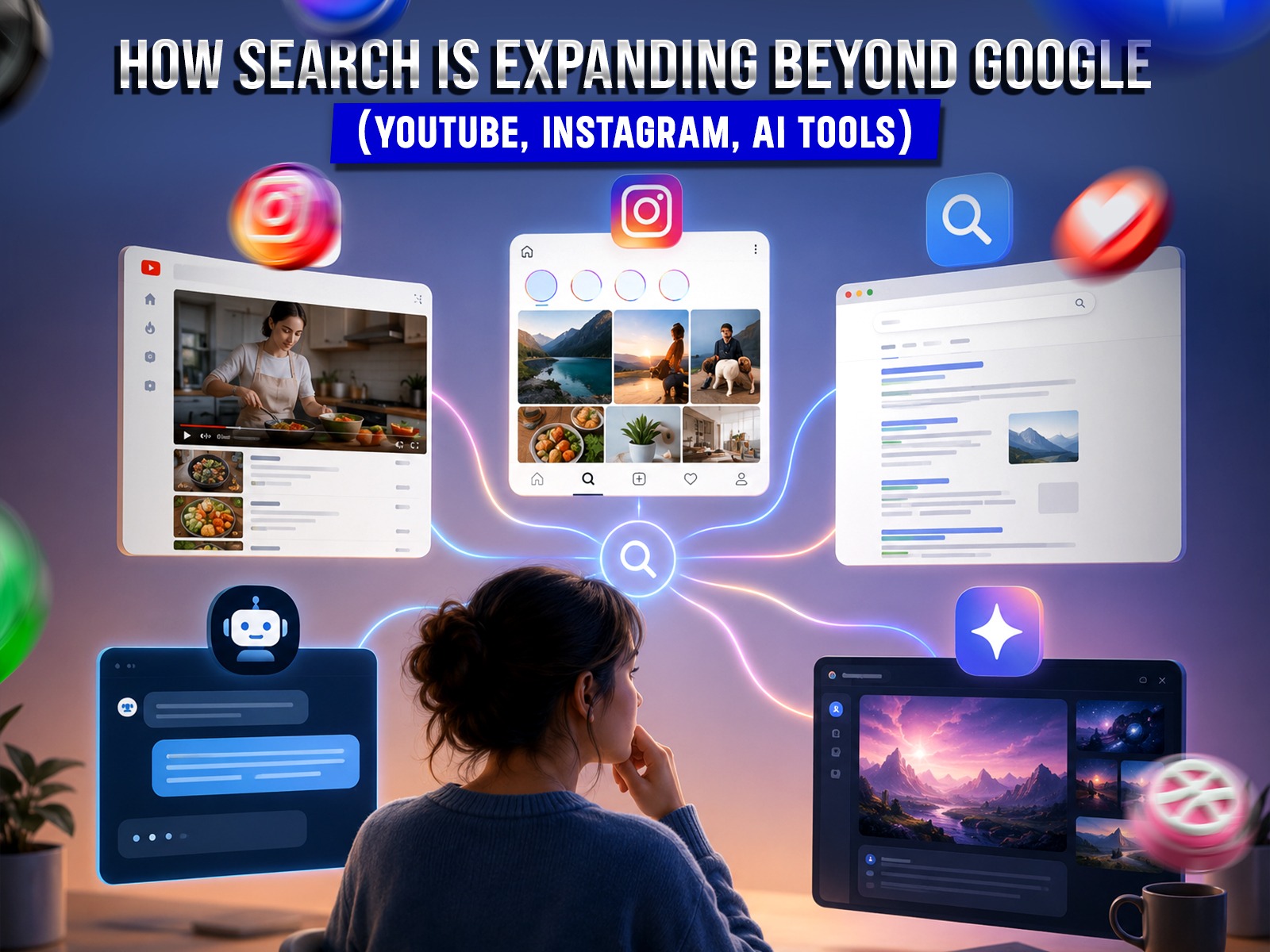
The way people search for information online is changing. For years, businesses have relied on traditional search engines to attract potential customers. A person would type a keyword into Google, browse through a list of websites, compare different options and then click on the result that seemed most relevant.
Because of this, digital marketing strategies were largely built around familiar SEO metrics such as keyword rankings, organic traffic, impressions, backlinks and click-through rates. Today, that search journey is becoming more conversational. Instead of typing a short keyword such as “best mobile app development company,” users can now ask AI-powered search platforms much more detailed questions.
They might ask, “Which mobile app development company is suitable for a growing business with a limited budget?” or “Can you recommend a top mobile app development company that provides both web and mobile app development services?”
AI platforms can then analyze information from multiple sources and generate a direct answer. This creates a new challenge for businesses. Your website may rank well in traditional search results, but that does not automatically mean your brand will appear when users ask an AI platform for recommendations.
A potential customer could receive a list of five companies from an AI-generated answer, and if your business is not among them, you may lose an important opportunity before the customer even visits a search results page. This is where Generative Engine Optimization, commonly known as GEO, is becoming increasingly important.
However, optimizing your brand for AI search is only one part of the process. Businesses also need to understand whether their efforts are producing results. In this blog, we will explore what GEO analytics means, why it matters for modern businesses and how you can track your brand across the growing world of AI-powered search.
What Is GEO Analytics?
GEO analytics is the process of measuring and analyzing your brand's visibility within AI-generated search results and conversational platforms. Traditional SEO analytics generally focuses on how a website performs within a search engine.
When people ask AI platforms questions related to your business, industry, products or services, does your brand appear in the answer? For example, imagine that a business provides web development and mobile app development services. A traditional SEO strategy may track keywords such as:
With AI search, however, users may ask questions such as:
Each question may produce a different answer, even though all of them relate to the same general business category.
Why Traditional SEO Metrics Are No Longer Enough
Traditional SEO is still extremely important. Websites need strong technical foundations, useful content, relevant keywords and a good user experience to perform well in search. However, AI search is creating an additional layer between the user and the website.
Previously, a user searching for information would generally see a list of links. The search engine acted primarily as a gateway, directing people toward different websites. AI-powered search can work differently. Instead of presenting only a collection of links, it may summarize information and provide a direct response to the user's question.
“Who are some reliable companies for custom software development?”
If the AI response mentions several businesses and explains what each company specializes in, the user may immediately begin comparing those brands.
At this stage, your company could be:
Traditional keyword tracking alone cannot provide this information.
A company may rank highly for a keyword such as “custom software development company,” but an AI platform might still recommend other businesses when a user asks a more detailed, conversational question.
This is why businesses need to look beyond conventional rankings.
SEO tells you how visible your website is within search results.
GEO analytics helps you understand how visible your brand is within AI-generated answers.
Both forms of visibility can work together.
The Growing Importance of AI Search
AI-powered search is changing the way people interact with information.
One of the biggest differences is the level of detail users can include in their questions. Traditional search often encouraged users to keep queries short. Someone might type:
“Best web development company.”
With AI, the same person can explain their complete situation:
“I run a small business and need an affordable company to build an e-commerce website that can also be expanded into a mobile app later. What type of development company should I look for?”
This is a much more specific search.
The answer may involve multiple topics, including web development, e-commerce, mobile applications, scalability and business requirements. AI platforms can combine information from different sources to create a response.
For businesses, this means visibility is becoming more contextual.
It may no longer be enough to optimize for one short keyword. Your content needs to demonstrate expertise across the broader questions that customers ask.
The Difference Between SEO Analytics and GEO Analytics
SEO and GEO are closely connected, but the way they measure success is different.\
Traditional SEO analytics might ask:
GEO analytics introduces additional questions:
Neither approach should replace the other.
The most effective strategy is to combine them.
Start by Tracking Brand Mentions
One of the simplest ways to begin GEO analytics is to track brand mentions.
A brand mention occurs when an AI-generated answer includes the name of your company.
Suppose you ask an AI platform:
“What are some companies that provide mobile app development services?”
If the answer includes Asteeri Infotech, that can be recorded as a brand mention.
However, one mention does not tell you very much.
To gain useful insights, you need to test a wider group of relevant questions.
For example, you could create a collection of prompts related to your services.
Some questions could focus directly on your brand:
“What does Asteeri Infotech do?”
“What services does Asteeri Infotech provide?”
Others could focus on your business category:
“Which companies provide mobile app development services?”
“Who offers custom web development for businesses?”
“What are some good software development companies for startups?”
You can then track whether your brand appears in the answers.
Over time, this creates a measurable pattern.
If your brand appeared in 10 out of 50 relevant questions last month but appears in 20 out of 50 questions this month, your AI visibility may be improving.
Measure Your AI Share of Voice
One of the most valuable GEO metrics is AI share of voice.
Share of voice helps you understand how visible your brand is compared with competitors.
Imagine that you monitor 100 AI-generated responses related to your industry.
Your company appears in 25 of those responses.
This immediately gives you useful competitive information.
Even if your business has strong visibility in traditional search, you may discover that competitors have a much stronger presence in AI-generated recommendations. This can happen for many reasons.
A competitor may have more authoritative content. They may receive more mentions from industry publications. Their brand information may be clearer across the web. They may have stronger reviews, case studies, news coverage or topical content.
GEO analytics helps identify these differences.
Track Brand Position and Prominence
Although AI search does not always provide traditional ranking positions, the order in which brands appear can still provide useful information.
Suppose an AI-generated response recommends five companies. If your brand consistently appears first or second, it may have stronger visibility than if it regularly appears at the bottom of the list. You can create your own internal measurement system.
For each tracked response, record:
This does not mean that position one is an official AI ranking.
AI-generated answers are dynamic and can change depending on the wording of the question, the available information and the platform being used.
However, tracking prominence over time can still reveal meaningful trends.
If your brand moves from occasional mentions at the bottom of responses to frequent inclusion near the beginning, that may indicate improving visibility.
Monitor Citations and Source Visibility
AI-generated search answers may use and reference information from websites across the internet. This makes citation tracking another important part of GEO analytics.
If your website is regularly cited when users ask questions related to your expertise, this can indicate that your content is relevant to those topics. For example, a detailed guide about mobile app development could potentially be referenced when users ask:
“How much does it cost to develop a mobile application?”
Another article might be relevant to:
“How do businesses choose a web development company?”
By tracking which pages receive visibility, you can identify the types of content that perform well in AI search.
This can help guide your future content strategy. Instead of creating content based only on search volume, you can also consider:
What questions are AI platforms repeatedly connecting with our website?
You may discover that certain formats perform particularly well, such as:
This information can help you create more strategically valuable content.
Track Accuracy as Well as Visibility
Being mentioned by AI is useful only if the information is correct.
AI systems can sometimes produce outdated, incomplete or inaccurate information. If an AI platform incorrectly describes your services, locations or capabilities, that can create confusion for potential customers.
For this reason, every GEO analytics strategy should include an accuracy review.
Ask questions about your business and examine the answers carefully.
Check whether the AI correctly understands:
For example, if Asteeri Infotech provides both web and mobile app development but AI systems consistently describe the company only as a website development business, there is a visibility gap.
GEO is not simply about increasing mentions. It is also about helping search systems and users understand what your business actually offers.
Connect GEO Analytics With Website Traffic
Brand visibility is important, but businesses ultimately want to understand whether it contributes to meaningful results.
This is where website analytics becomes important.
Track the visitors arriving from AI-powered platforms where referral information is available.
Then examine what those visitors do after reaching your website.
Do they:
This information can help you understand the quality of AI-driven traffic.
For example, your AI referral traffic may be smaller than your traditional organic traffic, but the visitors could be highly engaged because they arrive after receiving a detailed recommendation or answer.
Over time, businesses should aim to connect the entire journey:
This creates a clearer understanding of GEO's contribution to business growth.
How to Improve Your Brand Visibility in AI Search
Once you begin tracking your GEO performance, the next step is to improve it.
The first priority should be clarity.
Your website should clearly explain who you are, what you offer and who you serve. Avoid vague descriptions.
If your company provides mobile application development, web development and custom software solutions, make those services easy to understand.
The second priority is depth.
AI-powered search systems need useful information to work with. A website containing only short promotional pages may have less topical depth than a website that provides comprehensive resources.
Consider creating detailed content around the problems your customers face.
For example, a mobile app development content strategy could include articles about:
The third priority is originality.
Generic content is easy to reproduce. Original research, real case studies, expert insights and practical experience can make your content more distinctive.
Original information can help create a stronger reason for users and search systems to recognize your content.
Final Thoughts
The process does not have to be overly complicated in the beginning. Start with the questions that matter most to your customers. Monitor how AI platforms respond. Track whether your brand is included and how it is described. Compare your visibility with competitors. Identify the content and sources connected with strong performance.
Then use those insights to improve your digital presence. For Asteeri Infotech, GEO represents an opportunity to look beyond traditional rankings and focus on a bigger question: When potential customers ask AI for technology solutions, is the brand part of the conversation?
The businesses that understand this shift early will be in a stronger position to adapt their SEO, content and digital marketing strategies. In the future, success in search may not be measured only by where your website ranks.

November 3,2025
February 28,2023
December 28,2022
July 10,2020
December 3,2023
February 6,2025
June 27,2025
September 28,2026
March 20,2025

Copyright 2026 | All Rights Reserved by Asteeri Infotech

.jpg)