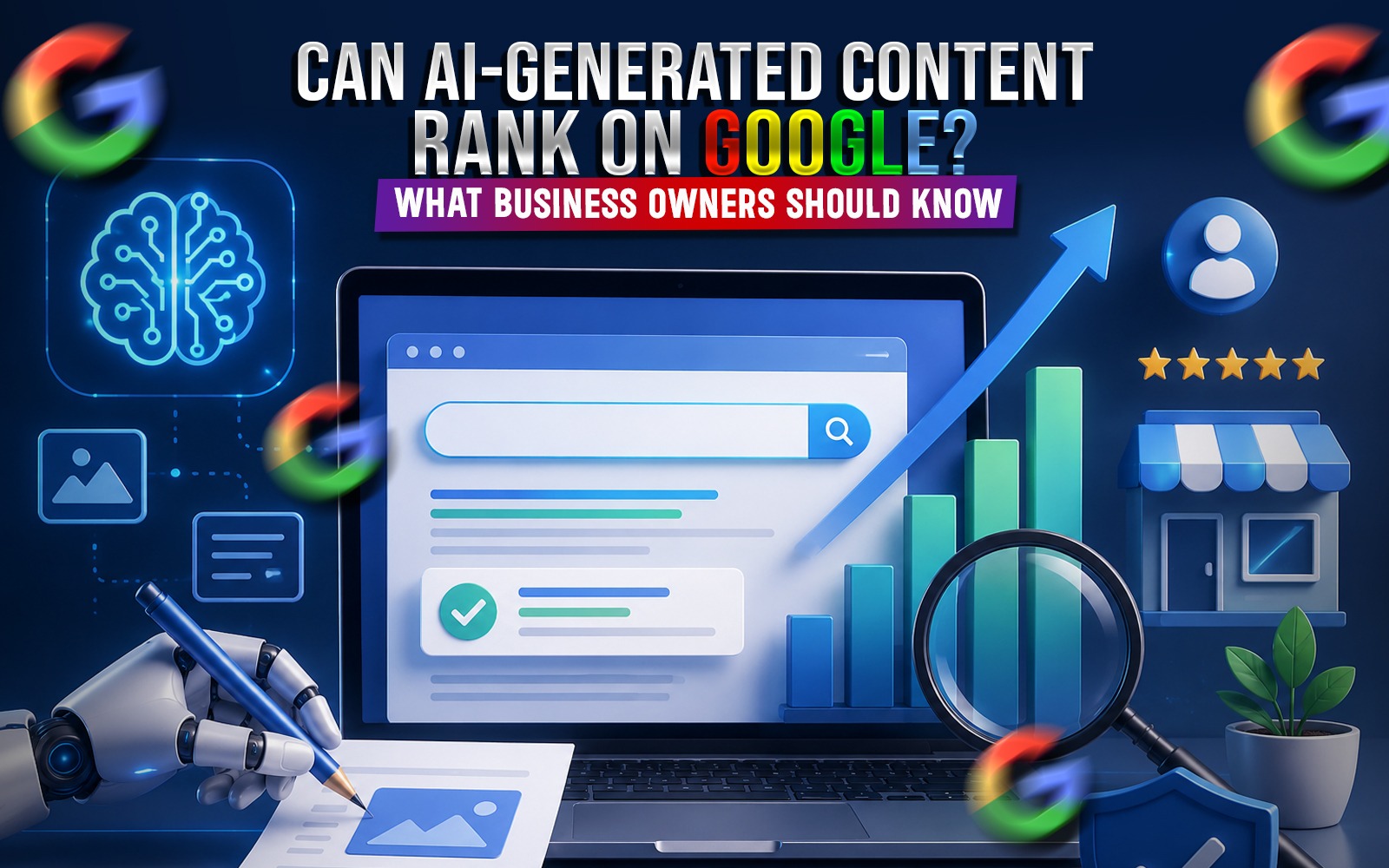
Creating website content used to require hours of research, writing, editing, and optimization. Today, artificial intelligence can help businesses develop blog posts, service pages, product descriptions, and other digital content in a fraction of that time.
For business owners managing multiple responsibilities, this technology offers an attractive way to maintain an active website without starting every article from scratch. Artificial intelligence has changed how businesses approach content creation.
From blog articles and website copy to product descriptions and marketing campaigns, AI tools can help companies produce content more efficiently. However, creating content quickly does not automatically lead to higher search rankings.
Business owners need to understand how Google evaluates content, what makes an article valuable, and how AI fits into a wider search engine optimization strategy. This is where choosing the top seo marketing companies becomes relevant.
A reliable SEO partner understands that content needs more than keywords and polished sentences. It requires accurate information, original insights, a clear purpose, and a genuine understanding of the target audience.
AI-generated content can rank on Google when it meets these expectations. The key is to use technology strategically rather than publishing large quantities of generic material in the hope of gaining visibility.
Discover whether AI-generated content can rank on Google, how to maintain quality and originality, and why the top SEO marketing companies focus on people-first content.
Can the Best/Top SEO Marketing Companies Help AI-Generated Content Rank?
The top seo marketing companies understand that Google does not automatically reject content simply because artificial intelligence helped create it. Instead, the focus should be on whether the content is useful, relevant, reliable, and created to serve readers.
For example, an AI-assisted blog explaining how businesses can improve website performance may perform well if it provides accurate recommendations, practical examples, and information that addresses real customer questions.
However, an article that repeats common industry advice without offering additional value may struggle to compete with more informative pages. Professional SEO strategies therefore focus on the quality of the finished content rather than the technology used to produce it.
AI can help with research, outlines, and drafting, while human reviewers ensure that the final article reflects genuine expertise and meets the audience's needs. Google's spam policies also address scaled content abuse. Producing many pages primarily to manipulate search rankings can violate these policies, regardless of whether AI or human writers created the material.
For business owners, the lesson is simple: AI can support content production, but it cannot replace a thoughtful SEO strategy.
Does Google Penalize AI-Generated Content?
One of the biggest misconceptions about AI and SEO is that Google automatically penalizes content created with artificial intelligence. That is not an accurate understanding of Google's approach.
Google's primary concern is the quality and purpose of content, rather than whether a human or an AI tool helped produce it. Content should offer genuine value to readers instead of existing solely to manipulate search rankings.
For example, an AI-assisted article that explains a complicated business problem accurately, answers common questions, and provides practical recommendations can be useful to readers. On the other hand, an article that repeats information already available across hundreds of websites without adding anything meaningful may have little competitive value.
The distinction becomes particularly important when businesses publish content at scale. AI can make production faster, but publishing more pages does not automatically create more visibility.
Google's spam policies address scaled content abuse, which involves generating large amounts of content primarily to manipulate search rankings rather than help users. This can apply whether the material is produced by AI, human writers, or a combination of both.
The takeaway for business owners: AI is a writing tool, not a shortcut around quality standards. Use it to improve the content creation process, not to replace the responsibility of providing helpful information.
Why Businesses Are Using AI for SEO Content
Businesses face increasing pressure to maintain informative websites, publish relevant blogs, and answer customer questions across digital channels. AI tools can make these tasks easier when used responsibly.
They can help marketers identify potential topics, organize research, develop article outlines, improve readability, and create initial drafts. This can reduce the time spent on repetitive tasks and allow teams to concentrate on strategy and editorial quality.
Nevertheless, automation should not become the main objective. A company that publishes ten similar articles may achieve less than one that creates a detailed, original resource addressing a specific customer problem.
The top seo marketing companies recognize that efficient content production needs to be balanced with originality, search intent, and business relevance.
Why Human Expertise Still Matters in AI-Assisted SEO
Artificial intelligence can help organize information, suggest topics, prepare outlines, and produce initial drafts. However, it cannot automatically understand every business's customers, competitive position, operational challenges, or unique selling points. Human expertise supplies that missing context.
For instance, two companies may offer similar digital marketing services but serve very different audiences. One may focus on local retailers, while the other works with international software companies. Their content strategies should reflect those differences.
A knowledgeable writer or SEO specialist can identify the questions that matter to each audience, challenge generic recommendations, and incorporate the company's actual experience.
Human editing also helps maintain a consistent brand voice. Without it, AI-generated articles can become predictable, overly formal, or repetitive across different pages.
Businesses do not necessarily need to choose between human writing and AI. A more practical approach is to assign each a suitable role: let AI support research and drafting, then use human judgment to improve originality, accuracy, relevance, and clarity.
The result should be content that sounds like it belongs to the business publishing it, rather than an article that could appear on any website in the same industry.
A Practical Workflow for Creating SEO-Friendly AI Content
Business owners do not need a complicated system to use AI responsibly. A structured workflow can make the process easier to manage.
Step 1: Identify a business-related topic. Choose a question that your customers genuinely ask and that relates to your products, services, or expertise.
Step 2: Research the keyword and search intent. Examine relevant search queries, competing pages, and the information users expect to find.
Step 3: Develop a useful outline. Organize the article around the reader's main question, supporting questions, practical examples, and a relevant conclusion.
Step 4: Use AI to support the drafting process. Generate ideas, structure explanations, improve readability, or prepare an initial draft. Give the tool sufficient context about the audience and purpose.
Step 5: Add original business knowledge. Include examples, expert observations, industry-specific details, and recommendations that reflect your company's experience.
Step 6: Review and optimize. Check factual accuracy, remove repetition, improve headings, add relevant internal links, and prepare a descriptive title and meta description.
Step 7: Publish and measure. Monitor the page's impressions, clicks, relevant search queries, and business conversions. Use those insights to decide whether the page needs improvement.
This approach makes AI a productive part of the process without treating automated text as a finished product.
How to Choose the Best/Top SEO Marketing Companies for Your Business
Choosing an SEO agency involves more than comparing service prices or promises of quick rankings. Businesses should evaluate how an agency researches topics, develops content, improves websites, and measures results.
The top seo marketing companies should be able to explain their content development process, including keyword research, audience analysis, editorial review, and on-page optimization.
They should also understand technical SEO, internal linking, website usability, and conversion tracking. These activities help ensure that content supports the wider business strategy rather than functioning as an isolated marketing task.
Before hiring an agency, ask questions such as:
- How do you ensure AI-assisted content is original and accurate?
- How do you identify relevant keywords and understand search intent?
- What human review takes place before content is published?
- How do you measure SEO performance and qualified leads?
- How do you update content when search trends or business information change?
A dependable agency should offer transparent reporting and realistic expectations rather than guaranteeing specific Google rankings.
How Asteeri Infotech Can Help Businesses Build a Smarter SEO Strategy
Businesses need more than a steady supply of blog posts to establish a meaningful online presence. They need a strategy that connects content with their customers' needs, website performance, and long-term business objectives.
Asteeri Infotech can position its digital marketing services around this broader approach to online growth. An effective SEO strategy begins with understanding the business: what it offers, who its customers are, which competitors are visible in search results, and what actions the website should encourage visitors to take.
From there, keyword research and content planning help identify relevant opportunities. On-page optimization improves how individual pages communicate their topics, while technical SEO addresses issues that may interfere with crawling, indexing, or usability.
AI tools can support this work by helping teams organize research, explore content ideas, and improve production efficiency. However, meaningful differentiation comes from applying the right strategy, checking information carefully, and ensuring that each published page serves a clear purpose.
For example, a software company might benefit from technical guides that explain real implementation challenges, while a local service business may need location-specific service pages and answers to common customer questions. The content strategy should reflect those different needs rather than applying the same template to every business.
By combining content development with technical optimization and ongoing performance monitoring, businesses can make better-informed decisions about their online marketing investments.
The objective is not to publish the greatest number of pages. It is to build a website that answers relevant questions, communicates expertise, attracts suitable visitors, and makes it easier for potential customers to take the next step.
Common AI Content Mistakes to Avoid
AI can speed up content production, but using it without a clear editorial process can create problems that undermine your SEO efforts.
These mistakes are not exclusive to AI-generated content. Human writers can make them too. The difference is that automation can multiply the problem when a business publishes large amounts of material without proper review.
Frequently Asked Questions
1. Can AI-generated content rank on Google?
Yes. Google can rank AI-generated content when it is useful, relevant, original, and reliable. Using AI does not automatically improve rankings, and content created primarily to manipulate search results may violate Google's spam policies.
2. Does Google detect AI-written content?
Google has systems designed to identify spam and assess content quality. However, business owners should not make avoiding AI detection their primary objective. The more important goal is to publish content that genuinely helps readers and meets Google's guidelines.
3. Is AI content better than human-written content?
Neither approach is automatically better. AI can help with research organization, drafting, and editing, while human expertise contributes judgment, context, and original experience. The strongest approach depends on the topic and the quality of the final content.
4. Should businesses disclose the use of AI in their content?
Disclosure can be helpful when readers would reasonably want to understand how the content was produced. The need depends on the context. Businesses should prioritize transparency where it matters and follow any applicable platform or industry requirements.
5. How can a business improve the chances of its AI content ranking?
Start with relevant topics, understand search intent, verify facts, add original insights, optimize the page naturally, and maintain a technically accessible website. Monitor performance and improve pages based on evidence rather than relying on publishing volume alone.
6. Can an SEO agency guarantee first-page rankings?
No agency can legitimately guarantee specific Google rankings in all circumstances. A professional SEO partner can develop a strategy, improve the website, monitor performance, and work toward measurable goals, but search results remain competitive and can change.
Conclusion
AI-generated content can rank on Google, but success depends on how effectively it serves the reader. Businesses should focus on producing accurate, original, well-structured content rather than relying on automation or keyword repetition alone.
The Best/Top seo marketing companies understand that sustainable SEO combines content quality, technical optimization, search intent, and performance analysis. By using AI as a supporting tool and maintaining strong editorial standards, businesses can create more valuable resources for their audiences.
Asteeri Infotech can help businesses develop a more structured digital marketing approach, with a focus on relevant content, thoughtful optimization, and long-term online visibility.
When evaluating the top seo marketing companies, look for a partner that understands this distinction and treats SEO as an ongoing process involving content quality, technical performance, and measurable business outcomes.
Asteeri Infotech can help businesses approach digital marketing with a focus on useful content, thoughtful optimization, and sustainable online visibility. The aim is not simply to get more pages indexed, but to create a stronger digital presence that supports real business growth.

November 19,2024
September 8,2022
September 28,2026
November 12,2022
October 21,2022
January 17,2024




Copyright 2026 | All Rights Reserved by Asteeri Infotech